SpotLocker User Guide & Technical Manual
Complete guide to the secure fishing intelligence platform, marine navigation suite, anti-piracy container, and administration tools.
What is SpotLocker?
SpotLocker is an enterprise-grade fishing intelligence marketplace and marine helm navigation platform. Unlike conventional GPS waypoint sellers that deliver raw unencrypted files vulnerable to piracy, SpotLocker operates as a licensed container system. Customers purchase waypoint packs for specific lakes, rivers, or offshore regions, and navigate to those coordinates inside our encrypted multi-platform app client container.
Secure Container Container
AES-256 (CBC mode) data-at-rest encrypted local caching backed by iOS Keychain & Android Keystore.
Helm & NMEA Sensor Suite
Real-time UDP/TCP marine sensor ingestion for depth sounders, water temperature gauges, and vessel speed.
Solunar & Environmental Feeds
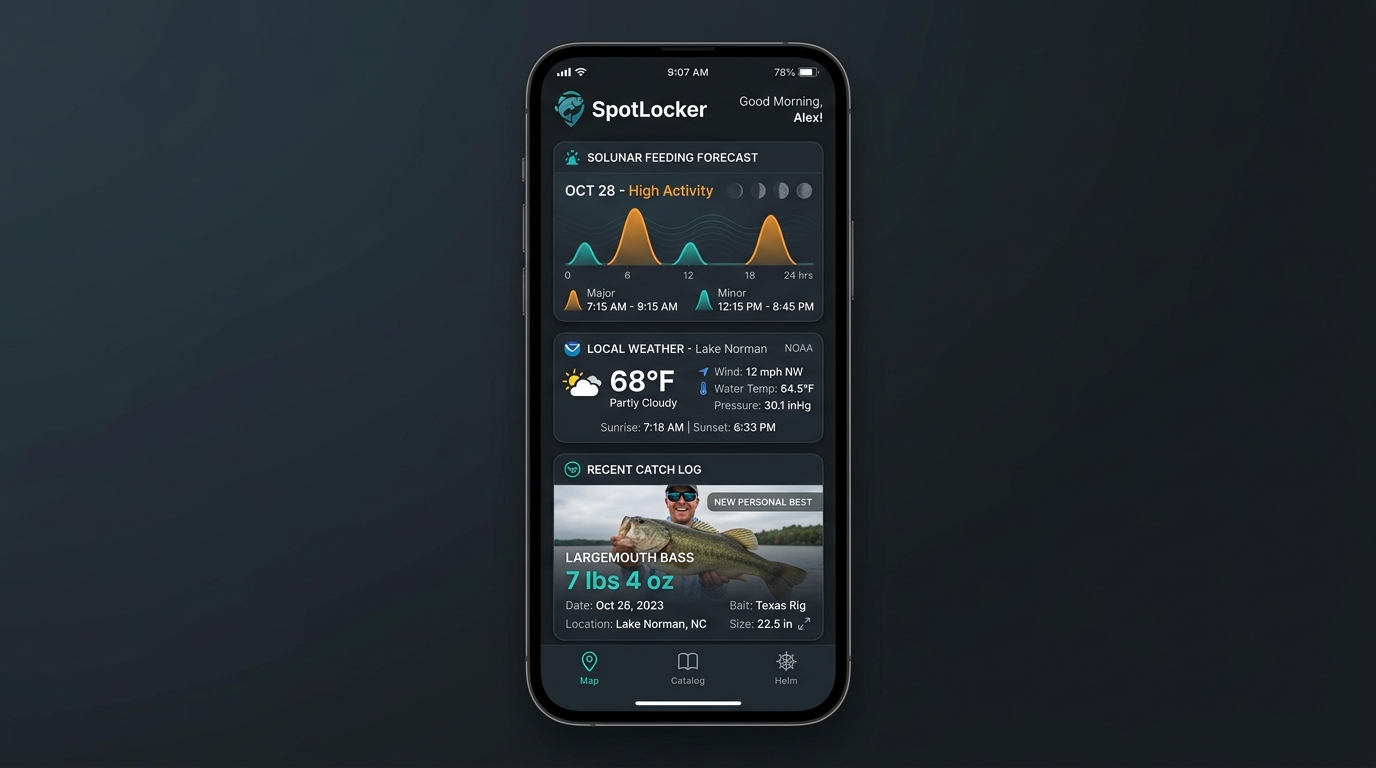
Calculates major/minor feeding tables, lunar phases, USGS water levels, and NOAA marine weather trends.
Admin Route Builder
Next.js web portal with batch CSV coordinate importing, pre-trip route sequencing, and security audit logs.
System Architecture Overview
SpotLocker consists of three primary interconnected ecosystem layers:
- Backend API Service (FastAPI): Manages user authentication, hardware device registration, license provisioning, Stripe payments, and security audit log monitoring.
- Cross-Platform Mobile App (Flutter): Interactive MapLibre/OSM canvas, Kalman GPS position filter, anchor watch geofencing, NMEA streaming, and Wear OS smartwatch integration.
- Admin Web Dashboard (Next.js): Desktop pre-trip route builder, waypoint pack creator, CSV batch coordinate ingest engine, and license manager.
Data Flow & Anti-Piracy Architecture
When an angler accesses waypoint coordinates on the water, the following multi-stage verification sequence occurs:
Authentication & Hardware Match
The client app sends JWT authentication tokens along with the device's hardware fingerprint (X-Device-Fingerprint) header to the backend API.
Active License Entitlement Check
The backend verifies that the requested pack ID belongs to an active, paid license held by the authenticated user account and that the device limit (default max 2) is respected.
AES-256 Encrypted Container Local Storage
When offline mode is enabled, coordinates are cached locally on the device using AES-256 CBC encryption. The master key is stored exclusively inside hardware secure enclaves (iOS Keychain / Android Keystore).
Dynamic Watermarking on GPX/KML Export
If explicit export allowances are enabled by administrators, exported GPX/KML files embed cryptographic metadata watermarks containing the user ID and license timestamp for traceability.
Navigating This Guide
Use the sidebar navigation on the left to explore specific sections of the manual, or jump directly to hands-on tutorials: